
Ever thought of doing your year abroad with the Erasmus+ exchange programme? Looking for reasons for going on Erasmus?
Every year there are thousands of students that go on Erasmus which means studying abroad or gaining work experience abroad while following a learning agreement.
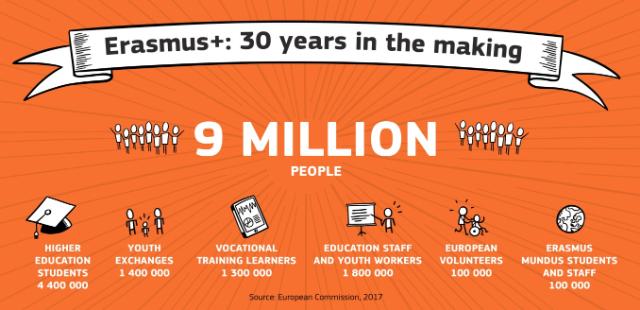
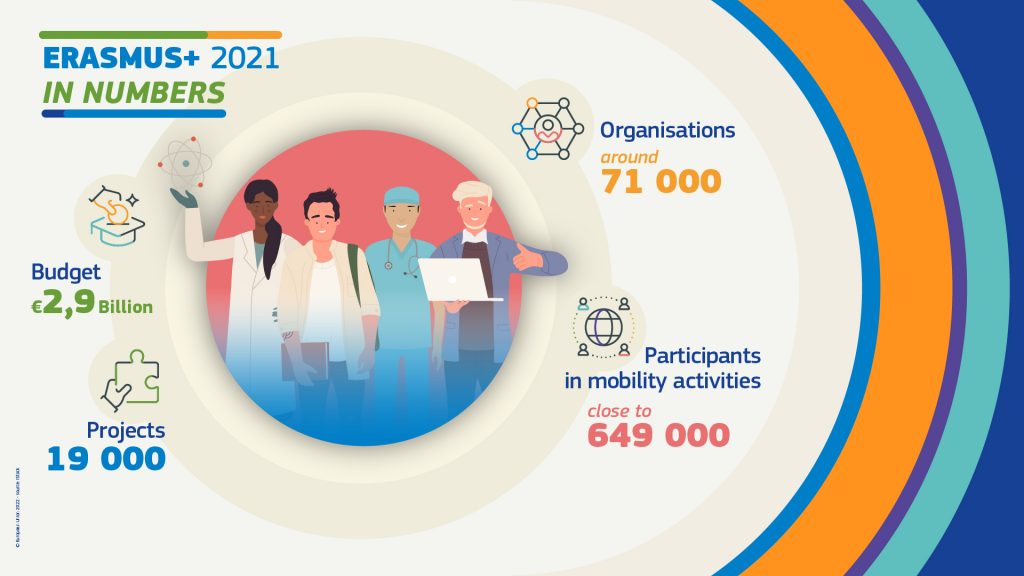
According to the latest Erasmus+ statistics, in the 2020 academic year, over 300,000 students participated in student mobility, while over 25,000 took part in work-based learning, such as work experience or internships. However, these numbers may vary year by year.
Studying or working abroad through the Erasmus+ programme can bring a wealth of opportunities and experiences that can enrich your life and help you grow both personally and professionally. Here are some of the benefits of the Erasmus programme in greater detail:
We have come up with 8 reasons for going on Erasmus
One of the reasons for wanting to study abroad or work abroad is travel. Exploring an unfamiliar place and giving you access to more spontaneous trips during your semester abroad or your year abroad.
Language: Another benefit of a year abroad is learning a new language or practicing one you already know. According to a study by the British Council, “91% of people who participated in Erasmus believe that it improved their language skills”. (British Council, 2016).
The third advantage of the Erasmus Programme is cultural enrichment as by living in another culture you will be able to widen your horizons and teach you about new cultural landmarks and tolerance. According to the European Commission, “Erasmus+ provides opportunities for young people and staff to experience other cultures, to make friends and to broaden their perspectives”. (European Commission, 2021).
A fourth incentive could be independence thanks to the financial support that the grant the European Commissions offers each partaker in the programme. According to the European Commission, “Erasmus+ provides financial support for students, staff, and organizations to participate in mobility activities”. (European Commission, 2021).
The fifth of the reasons for going on Erasmus is education, as it going on Erasmus can give you a taste of what studying abroad means. According to the European Commission, “Erasmus+ provides opportunities for students to study or train abroad, and for staff to teach or work in another country”. (European Commission, 2021).
The sixth aspect mentioned very often is social as making friends is a huge part of studying or working abroad during your Erasmus+. According to a study by the British Council, “92% of Erasmus participants made international friends through the programme”. (British Council, 2016).
Testing the waters: The seventh point is seeing if living abroad is for you, take it as a test that will help you define your future. According to the European Commission, “Erasmus+ provides opportunities for young people and staff to test their independence and adaptability”. (European Commission, 2021).
And finally, the eighth of the reasons for going on Erasmus is improving your CV as an experience abroad will demonstrate a certain openness and flexibility that companies of all sizes may appreciate in a candidate. Having worked abroad is very often synonymous for improved communication skills and heightened cultural awareness. According to a study by the European Youth Forum, “Erasmus+ provides valuable experience for young people and is often viewed as a valuable addition to a CV”. (European Youth Forum, 2018).
All these reasons for going on Erasmus were inspired by the following reads:
Sources on reasons for going on Erasmus :
- British Council. (2016). The Erasmus Impact Study. Retrieved from https://www.britishcouncil.org/sites/default/files/the-erasmus-impact-study-2016.pdf
- European Commission. (2021). Erasmus+. Retrieved from https://ec.europa.eu/programmes/erasmus-plus/resources/what-erasmus_en
- European Youth
- Our blog contributions
The information regarding the number of students and participants in Erasmus+ can be found on the official website of the European Commission, in the Erasmus+ annual report. The reports are publicly available online, here is the link to the most recent one: https://ec.europa.eu/programmes/erasmus-plus/resources/documents/erasmus-plus-annual-report-2020_en.
You can also find more statistics and information on the Erasmus+ program on the official Erasmus+ website: https://ec.europa.eu/programmes/erasmus-plus/resources/statistics_en.